Saturday, May 16, 2026
Saturday, May 16, 2026
Why Your Horse's Behaviour Problems Are Often a Body Problem — Not a Training Problem
________________________________________
Your Horse's Behaviour Is a Message — Are You Hearing It?
I want to say something that I believe is one of the most important things a horse owner can hear:
There is no such thing as a bad horse. There are only horses whose messages haven't been understood yet.
In my years of working with horses across Europe, I have encountered countless animals who were labelled as difficult, dangerous, aggressive, or "just not a nice horse." Horses who had been through multiple training programmes without lasting improvement. Horses who were feared or avoided by their owners.
In almost every case — not some, almost every case — there was a physical root to the behaviour. Pain. Imbalance. Chronic discomfort. A nervous system under unrelenting stress.
The behaviour was not the problem. The behaviour was the message.
________________________________________
How the Body Creates "Difficult" Behaviour
Pain-Related Behaviour
A horse in chronic pain cannot tell you. It has no words. What it has is behaviour — and behaviour is how it communicates what its body is experiencing.
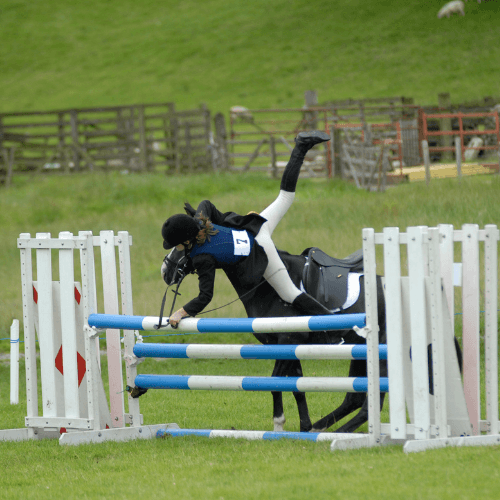
The horse that pins its ears when girthed. The horse that kicks out during schooling. The horse that bucks when asked to canter on one rein. The horse that used to be sweet to handle and has become unpredictable. The horse that is "fine on the ground but difficult to ride."
These are pain signals. And they are consistently misread as training problems — addressed with more pressure, more correction, more training — when the correct response is to investigate what the body is communicating.
Where is the pain coming from? Common sources include:
• Back pain from poorly fitting saddles, compensatory muscular patterns, or spinal issues
• Hind end pain from joint disease accelerated by excess weight and systemic inflammation
• Gastric ulcers — one of the most common causes of "sourness," girthiness, and reluctance in horses
• Laminitic pain — even subclinical, the horse may be experiencing discomfort in the hooves that dramatically affects its willingness and ability to work
• Dental pain — the horse whose contact is inconsistent, who evades the bit, who tilts its head, may simply have dental issues that have been missed
Metabolic and Hormonal Influence on Behaviour
The metabolic picture is inseparable from behaviour.
A horse with EMS, insulin dysregulation, or PPID has chronically disrupted cortisol and stress hormone levels. This creates a nervous system that is more reactive, less able to tolerate pressure, more prone to anxiety and unpredictable responses.
The horse that is "worse in spring" — when the grass NSC levels rise, triggering insulin spikes — is demonstrating the direct link between metabolic state and behaviour. It is not a coincidence. It is cause and effect.
Gut Dysbiosis and the Behaviour Connection
The gut-brain axis is as real and as powerful in horses as in any other mammal. The dysbiotic gut produces inflammatory compounds that affect the brain, alters neurotransmitter availability, and creates a chemical environment that predisposes the horse to anxiety, reactivity, and heightened stress responses.
The horse with chronic gut issues almost invariably has associated behavioural changes. And when the gut is restored — when the dysbiosis is resolved and the inflammatory load reduces — the behaviour very often changes alongside the physical health. Unless the problem is in the body, in which case we need to look at it — and sometimes thesre factors come together.
________________________________________
Flight or Freeze — The Two Faces of Chronic Stress
When a horse is under unrelenting stress, the nervous system has two primary adaptive responses:
Flight — the horse becomes highly reactive, flighty, spooky, hard to settle. It overreacts to normal stimuli. It is never fully relaxed. It is permanently in a low-level state of alert.
Freeze/shutdown — the horse becomes quiet. Too quiet. Compliant in a way that reads as calm but is actually numbness. The horse has learned that reaction brings punishment and has chosen the only alternative available: to switch off.
The freeze/shutdown horse is often praised as "a good horse." In reality, it is frequently the most traumatised horse in the yard — a body under profound chronic stress, expressing it through absence rather than explosion.
Both states are equally damaging to physical health. The nervous system activation is the same. The cortisol load is the same. The physical consequences — gut health, immune function, metabolic regulation — are the same.
________________________________________
Reading What Your Horse Is Telling You
Every horse communicates constantly. The question is whether we are listening.
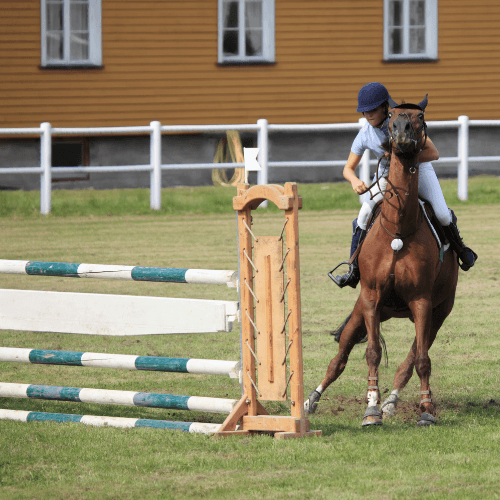
The early signals — the ones that come before the dramatic behaviour — are subtle and easy to miss:
• Brief ear pinning when approached with tack
• A slight tension when touched in certain areas
• A fractional hesitation before stepping forward
• Tail wringing in work that appears relaxed
• Eyes that seem tired or slightly glazed
• A horse that suddenly shows no interest in being brought in to work
These are the body's first polite attempts to communicate. When they are not heard, the signals escalate. Because the horse has no other language.
When we learn to hear the first signals — and to respond by investigating the physical root rather than adding training pressure — the escalation stops. The dramatic behaviour often disappears entirely — because the communication has finally been received.
________________________________________
The Training Approach That Heals Rather Than Harms
Training methods that rely on pressure, fear, and forced compliance do not just create training problems. They create health problems — directly and measurably.
Chronic fear activates the stress response as powerfully as any physical threat. A horse that is regularly trained through fear, pain, or overwhelm is a horse with chronically elevated cortisol — and all the physical consequences that entails: gut ulcers, immune suppression, weight dysregulation, metabolic disruption.
Training that is built on communication, on listening, on building genuine confidence and relaxation — is not just kinder. It is healthier. The horse's body responds to the absence of fear as powerfully as it responds to the presence of good nutrition.
________________________________________
→ The Ultimate Feeding Plan — the nutritional foundation that supports a calm, resilient nervous system
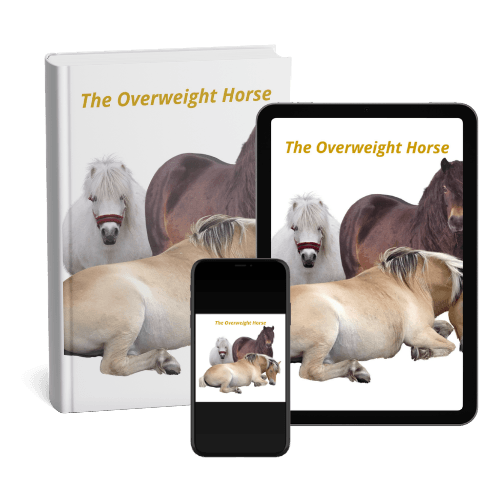
→ The Overweight Horse — addresses the metabolic root causes of behavioural changes
→ Homemade Horse Treats — natural healthy treats
________________________________________

Hi, I Am Sofiia Nygaard
CEO Of Best Blog Ever
Your pet is trying to tell you something. I'm here to help you hear it.
Best Blog Ever is where pet owners who are done with guesswork come to find real answers. Natural health, nutrition, behaviour and movement, all through the lens of root cause, not symptom management. Because your animal deserves more than just getting by.
Get My Best Selling Products!
You just read about this...
Super excited about this product? I am, too!
Ready to buy it? Get access to the Products here: